
The Discourse
Self-Promotion Sunday

The Oscars are coming up, so there’s a lot of discourse over what that actually means.
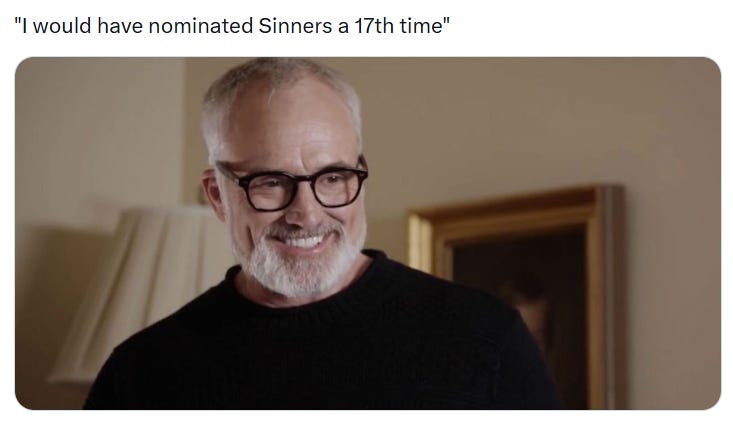
I’m happy that a popular movie, Sinners, actually seems to be the front runner. It’s exactly the sort of big-budget crowd-pleaser I’ve been advocating for for years.
Of course, that might not be why the Academy gave it 16 nominations…
Speaking of racial politics, my recent post on House of the Dragon got some nice responses that bear addressing, but first, some self promotion…
Mark Your Calendar
A short film I’ve been working on for… a long while is finally available on my other Substack, but only for paying customers. Everyone else will have to wait a couple of weeks. It’s a romcom, so appropriately, it’ll premier on Valentine’s Day. Click on the link and set a reminder to join us on the live stream!
A Reply to the Replies
In response to my post about the race-bending of House Velaryon in House of the Dragon, Quinn Que ❁ pointed me to his article Racebending—What It Is and Why It Should End.
He does put forth a thorough and forceful argument against “race-bending.”
Racebending isn’t just an arbitrarily taboo practice. Nor is it some potentially permissible tool to ham-fistedly force diversity into a narrative. It’s very much predicated on pernicious ideas about identity and groups. As we established above, many defenders of racebending think that certain groups don’t have meaningful identities at all, and that it’s therefore fine to racebend them.
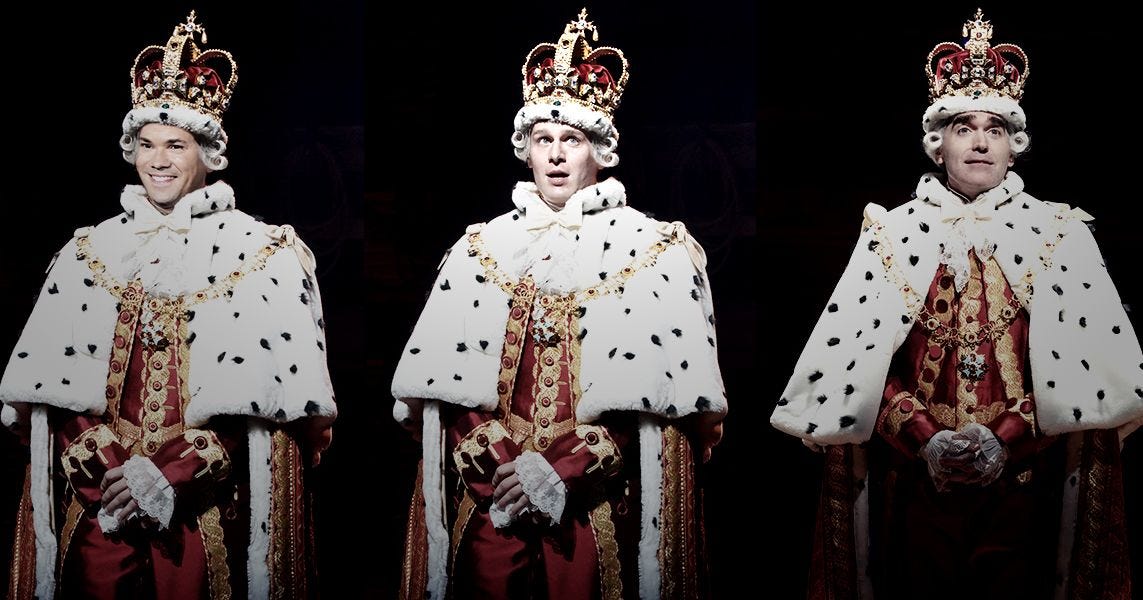
This reminds me a bit of Hamilton. Every major production uses “colorblind” casting… with the exception of King George. At least so far, from Broadway to the West End to touring companies, the founding fathers are a Colors of Benetton ad, but the villain is always a white guy.
That being said, I do think Quinn overstates his case in parts. Which is understandable, because he’s pushing back against what seems to be intractable cultural momentum. You gotta push hard if you want the pendulum to swing back. But I have some minor points of disagreement.
“Best actor for the job? There are countless actors of all ethnicities who are equally talented.”
This argument implies that there is a dearth of available people to fit these parts, when anyone who’s spent any time in a casting call or in pre-production knows the exact opposite is true. A film like Logan needed a pre-teen actress who spoke English and Spanish, could do stunt work, and who looked like she could plausibly be Hugh Jackman’s daughter. They spent months auditioning dozens of little girls—they had options! Let’s stop with the disingenuousness.
I want to contest this a little, and stand up for small productions. A big superhero movie has options, but an indie film doesn’t always have the time or money to continue searching. You have to make do with the cast you have access to.
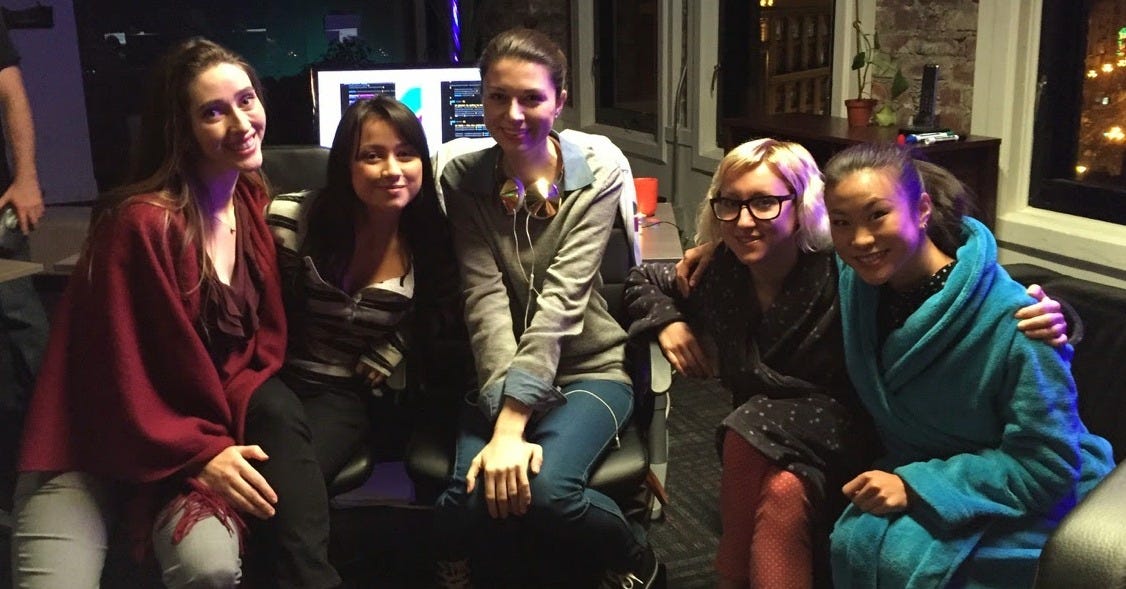
And to be perfectly fair, to counter my own counterargument, the producers and I did do exactly what Quinn suggests on Other Halves. Kelly Morr and I had written all of the parts with no particular races in mind, to leave our casting options as open as possible. In the end, we wound up with five white actors, a mixed race actress, and an Asian actress.
But a little before production began, the Asian actress backed out. Suddenly, in this movie about a tech startup set in San Francisco, we only had half an Asian character. It just didn’t make sense. So to replace her, we had to go back through our casting videos to find another Asian actress.1 We did eventually, and it turned out for the best.
But it was a real hassle, and I hesitate to make it a requirement except under specific circumstances like ours.
Quinn goes on—
Since many incredibly skilled actors of all ethnicities exist, the reality is that good ones are always overlooked, it’s a necessary reality when casting is a subjective art in itself. It’s also true with almost any job in most industries.
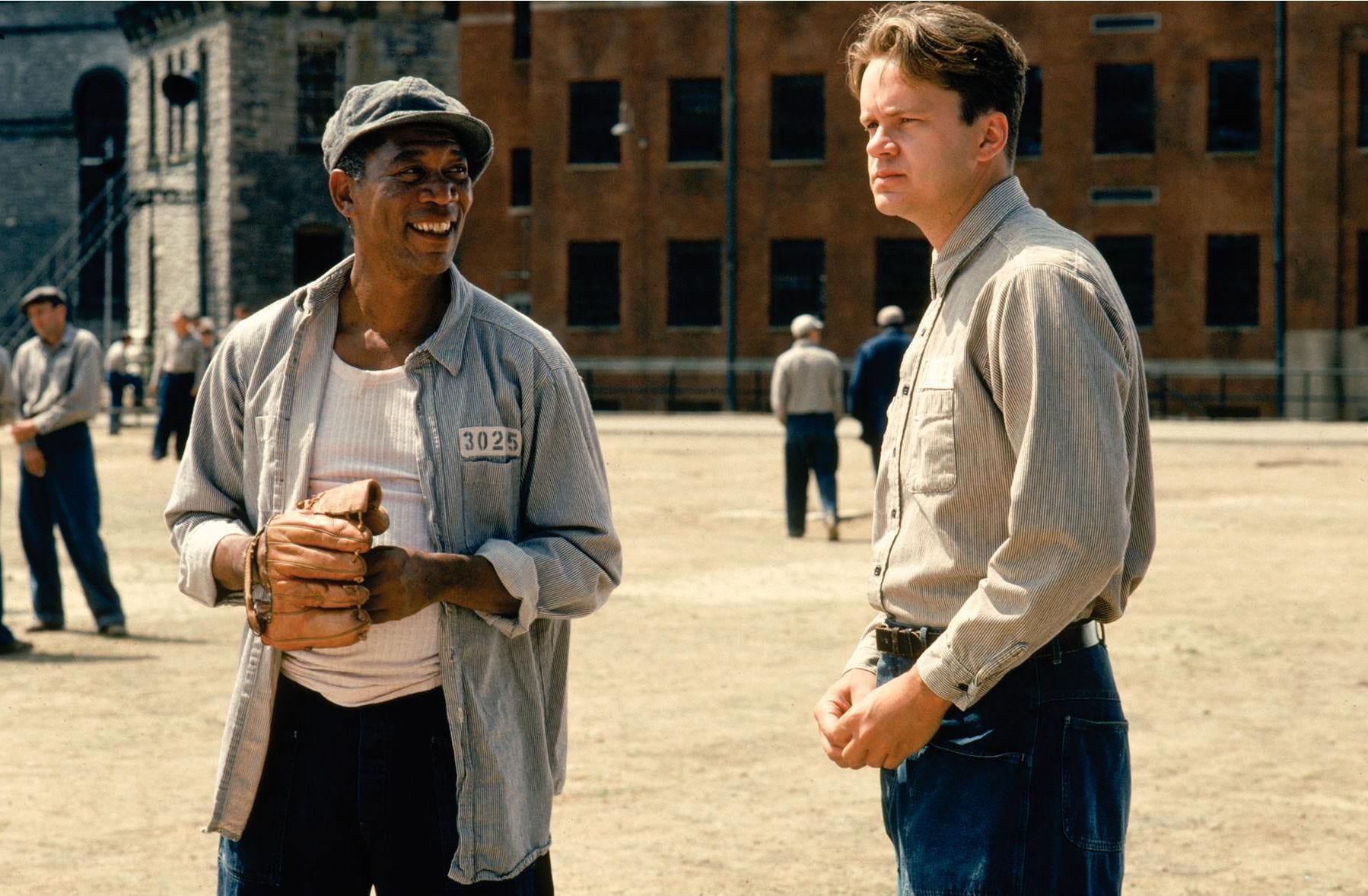
Here I think he contradicts himself. Because casting is inherently subjective, we have to allow for racebending, at least when it’s done in good faith. Once again, I point to The Shawshank Redemption. If it weren’t for colorblind casting, we would’ve missed out on one of the greatest performances of all time.
I don’t agree with it 100%, but I still highly recommend you read the full article over at the Journal of Free Black Thought —

Crude Knight
This next bit is very vulgar. Mom, if you’re reading this, skip this section. Seriously.
The comment sections to The Worst Cut in Knight of the Seven Kingdoms seemed to agree with me that the intended meaning of the poop cut didn’t work the pilot. There’s still not one person who read it as intended, as far as I’ve been able to discern.
Most people just thought it was a gross way to start an episode. And, well, it happened again in the second episode—
Josh Tatter pointed me to an interview with the showrunner—
I felt bad for Ser Arlan at some point. He was the only person who's ever looked out for Dunk and really stuck with Dunk. And he died on a muddy road in the middle of nowhere, was buried without ceremony, and now Dunk is going around trying to find somebody who just even remembers him — people that he served for, people that he bled for, these knights and these lords. They can't even remember his name. I felt the need to give him his one special thing, to channel a little Boogie Nights, I suppose.
This time, I think the issue is that the flashbacks don’t appear to be lying or even misleading in any way. I don’t think anyone took them to be Duncan’s rose-tinted vision of the past. The scenes just seem to depict literally what happened. Especially in the absence of Dunk himself, I didn’t get the sense that this was his view of his hero Arlan. Maybe that’s just me. If you’re watching AKotSK, what did you think?
I can’t wait to see what crude imagery comes before the title of episode 3.
Asian-Canadian, I should say. The mixed-race actress was a British citizen, and one of the white actresses was German. It was a very international cast.